
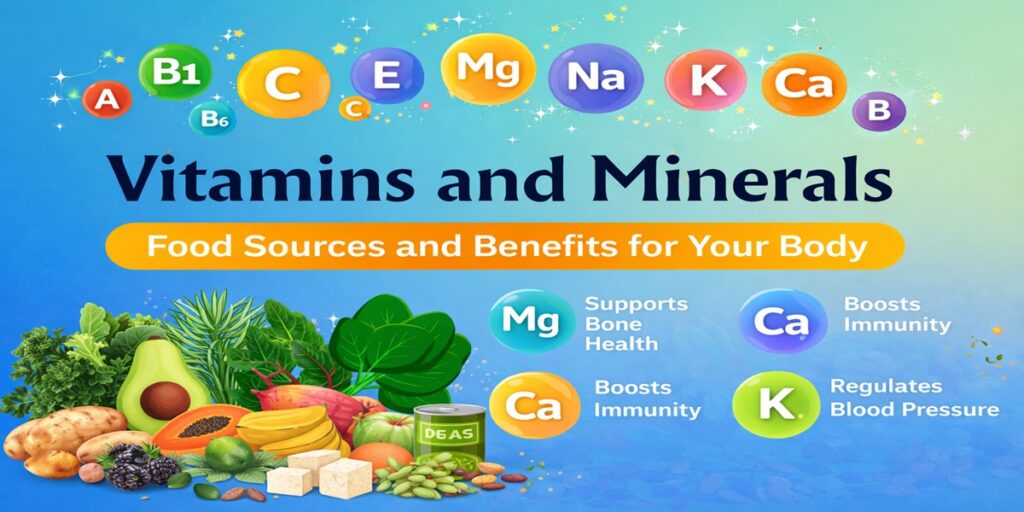
The body requires essential vitamins and minerals for its proper functioning. The body requires these nutrients because they control its overall health and physical performance. Our bodies require vitamins and minerals because their absence results in nutritional deficiencies and weakened immunity systems.
It is essential to include multiple types of nutrient-dense foods in our meals because this practice enables us to obtain essential vitamins and minerals. A balanced diet of all the essential nutrients can help us meet our daily requirements.
The Importance of Vitamins and Minerals in Our Daily Diet
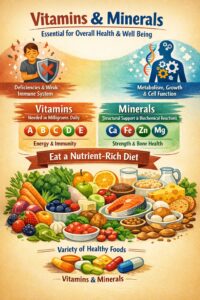
Vitamins and minerals play a very important role in maintaining overall health and well being. Without sufficient vitamins and minerals, our bodies may experience deficiencies and compromised immune systems. Vitamins are needed in small amounts (milligrams daily) for metabolism, growth, and proper cellular function. Minerals help in providing structural support to our body along with aiding in biochemical reactions in our body. We should ensure that our daily diet includes a variety of nutrient-rich foods to provide us with the necessary vitamins and minerals needed by our body.
Understanding Nutrients: Macronutrients and MicroNutrients
The body requires macro nutrients which include carbohydrates and proteins and fats in substantial amounts. The body uses these nutrients as its primary energy sources while they also help maintain health and physical condition. The body uses carbohydrates as its immediate energy source. Healthy fats function as hormone regulators in the body and they support brain development while proteins serve as muscle building materials.
Micro nutrients which include vitamins and minerals require smaller amounts for essential body processes. These micronutrients support cellular development and immune defense mechanisms and metabolic processes. The vitamins in the body help enhance blood quality together with skin and nerve functions while they convert food into energy. The body requires minerals for digestion and food processing and enzyme production while they maintain bone and heart system health.
The human body needs both macro and micro nutrients as essential components for maintaining optimal health because these nutrients should be consumed through our regular meals. The body uses macro nutrients to create energy while micro nutrients enable essential body processes to function correctly.
A Comprehensive List of Essential Nutrients and Their Daily Requirements
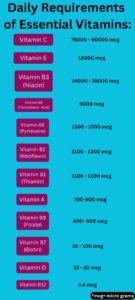
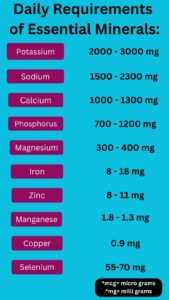
Essential nutrients are vital for our bodies to function optimally. Here is a comprehensive list of essential nutrients and their daily requirements:
- Vitamins
- Minerals
- Proteins, Carbohydrates, and Fats

Remember, these are general daily requirements and may vary based on age, sex, and specific dietary needs.
The Benefits and Functions of Various Nutrients
Vitamins and minerals play a vital role in maintaining our overall health and wellbeing. Here are some of the key benefits and functions of various nutrients:
Benefits of Various Vitamins as well as Different Sources of Various Vitamins:
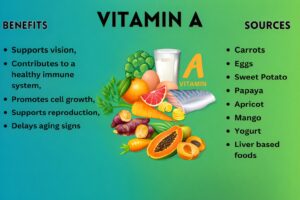
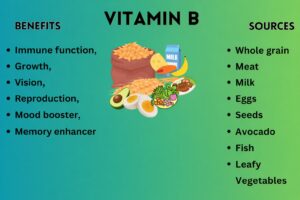
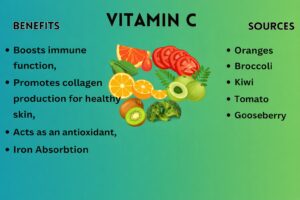
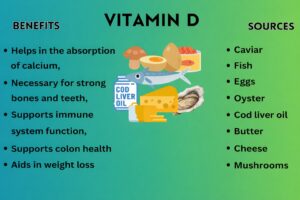
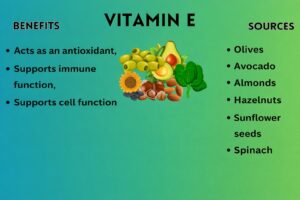
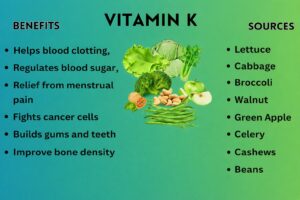
Benefits of Various Minerals as well as Different Sources of Various Minerals :
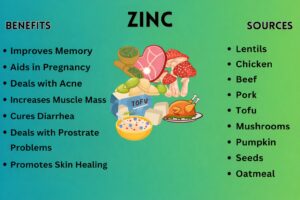
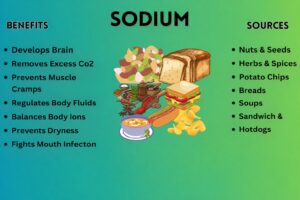
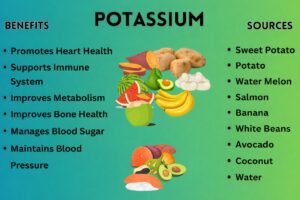
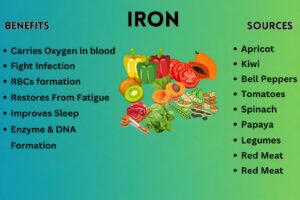
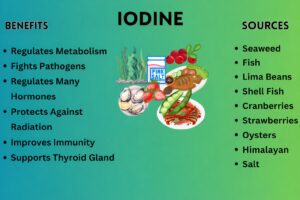
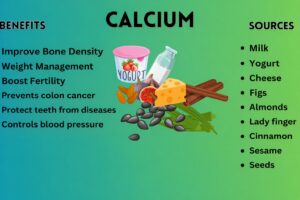
Proteins:
Essential for growth and repair: Proteins are the building blocks of our body tissues, including muscles, organs, and immune cells.
These are just a few examples of the benefits and functions of various nutrients. Including a wide variety of nutrient-rich foods in our daily diet can help ensure that we receive adequate amounts of these essential vitamins, minerals, and proteins.
Discovering Nutrients in Everyday Foods
When it comes to obtaining the necessary vitamins and minerals, incorporating nutrient-rich foods into our daily diet is key.
Here are some common foods and the nutrients they contain:
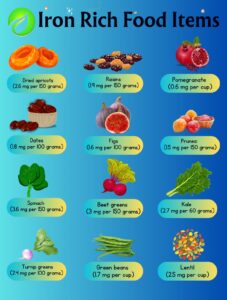
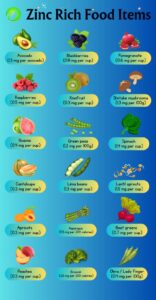
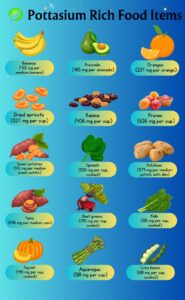
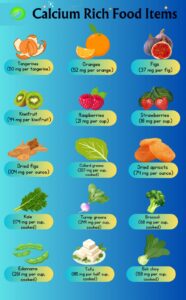
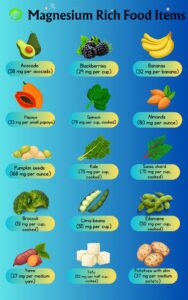
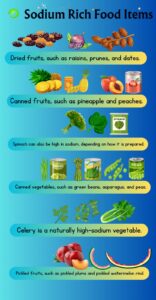
Good and Bad combination of Vitamins and Minerals
Good Combination
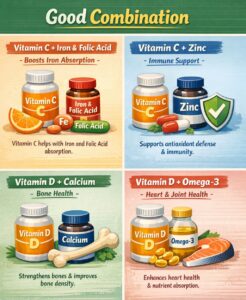
Vitamin C should be combined with Iron and folic acid tablets, as vitamin C helps with iron absorption.
Vitamin C and Zinc supports each other anti-oxidant properties and helps in building body’s immune system. Therefore, it is advised to take Vitamin C with Zinc together.
Vitamin D and calcium support each other in building bone health. Calcium provides the adequate ingredients in body to absorb maximum Vitamin D and helps in strengthening bones.
Vitamin D taken with Omega-3 rich food aids in higher absorption of both the nutrients. While Vitamin D is fat soluble vitamin and Omega-3 is fatty acid, both helps in promoting heart health, bone density and improving immune system functions of the body.
Bad Combination
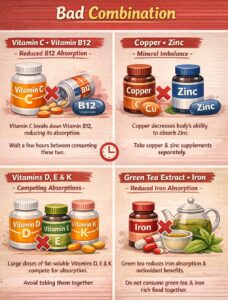
Vitamin C should not be taken with Vitamin B12 as it breaks down molecules of Vitamin B12 into smaller compounds reducing its absorption. It is advised to wait for few hours between consuming these two.
When one starts taking copper supplement, it also decreases the body ability to absorb zinc as body get used to getting minerals from external diet. Hence, mineral supplements like copper and zinc should be taken together to avoid the deficiency of zinc while taking copper supplements.
Large doses of fat-soluble vitamins like Vitamin D, E and K are taken together then they compete with each other for absorption. Hence, decreasing the overall absorption rate by body. Therefore, it is advised to not take these vitamins together.
Green tea extract when taken with iron supplements combines together to form different compound. This reduces the iron absorption and antioxidant properties of green tea. Therefore, it is advised that green tea and iron rich foods should not be consumed together.
Conclusion
The conclusion of the study shows that vitamins and minerals function as vital components which support complete human health and wellness. The body needs these nutrients because they enable essential body functions so any deficiency will result in health problems and weakened immune defenses. People can meet their vitamin and mineral needs through a complete diet which contains multiple sources of nutritious food. Understanding daily essential nutrient requirements enables us to create balanced diets which satisfy our bodily requirements. Fruits, vegetables, meat, dairy products, and whole grains serve as excellent sources which provide vitamins, minerals, proteins, carbohydrates, and fats. Our body needs these nutrients for good health so we should include these foods in our meals throughout each day.